
A Goldman Sachs report indicates that up to 12% of India's non-agricultural workforce is at risk of substitution by generative AI, while 42-48% could be complemented. The report highlights uneven impacts across sectors and job types, with IT-enabled services facing higher risk and physical tasks remaining less affected. Gen-AI is projected to boost India's labour productivity growth over the next decade.

Infrastructure major Larsen & Toubro (L&T) has secured a mega order, valued between Rs 10,000 and Rs 15,000 crore, to construct India's largest single-cluster artificial intelligence (AI) infrastructure facility. This strategic move marks L&T's entry into the AI Factory business, aiming to establish an NVIDIA B300-based AI Factory in Chennai to power the AI-native cloud platform of US-based Together AI, thereby strengthening India's AI ecosystem and supporting global innovation.

India's frontier model company Sarvam secured a dominant 87% share of the total funding received by the country's startups building artificial intelligence (AI) for Indian languages in 2026, raising $345 million out of a total of $399 million, according to a Tracxn report.

Infosys Senior Vice President Vikram Meghal stated that India is experiencing a significant demand window in the semiconductor market and must evolve from merely engineering products to inventing complete systems. He highlighted the massive shifts driven by AI and supply chain challenges, urging a focus on "Invent in India" to capture higher value and leverage decades of investment in the ecosystem.

The University of Delhi and semiconductor major AMD have signed a Memorandum of Understanding (MoU) to train up to 10,000 students and faculty in industry-relevant artificial intelligence skills over the next year. This collaboration will provide access to AMD's AI Engage Developer Programme, including its open-source ROCm AI software platform, learning resources, and developer GPU cloud credits, aiming to foster indigenous AI capabilities and bridge the gap between academia and industry.

Indian equity markets, represented by the Sensex and Nifty 50, concluded Samvat 2082 with significant weekly gains, marking their strongest performance in nearly six years, despite it being their weakest Samvat in 15 years overall. The late recovery was driven by hopes of tax changes, resilient corporate earnings, and easing geopolitical tensions.

India is caught in a no-man's land, not cheap enough for value investors to pile in but not growing fast enough to attract growth investors either, asserts Akash Prakash.

As the government faces a difficult choice in keeping up with the rest of the world in AI development while making sure it does not add to unemployment, it has set up a task force to draw up a policy for the accelerated deployment of AI

For the first time, co-working spaces have surpassed the IT/ITeS sector as the largest occupier of office space in India during the January-September period, indicating a significant shift towards flexible workspaces, according to Anarock Research & Advisory.

Mukesh Ambani, Chairman of Reliance Industries, has called upon India's engineering talent to spearhead Jio's ambitious artificial intelligence initiative. He emphasized India's role as a creator and global leader in AI, not just a consumer, outlining the execution phase of Reliance Intelligence with partnerships and a focus on developing affordable, language-fluent AI for all Indians.
A report by Bain & Company and HealthQuad identifies remote patient monitoring, OT/ICU optimisation, and chronic disease management as key opportunities for Artificial Intelligence in Indian healthcare. The report highlights a shift from experimental AI to real-world applications, driven by government initiatives, increasing EMR adoption, and a robust startup ecosystem. AI's autonomous capabilities are rapidly advancing while costs decrease, creating significant growth potential for providers and startups.

The Central Board of Indirect Taxes and Customs (CBIC) is set to significantly increase its use of artificial intelligence (AI), machine learning (ML), and real-time analytics in Customs processes, aiming for a near-touchless, near-digital clearance experience, according to Chairman Vivek Chaturvedi.

Chief Justice of India Surya Kant has called upon the Commonwealth Legal Education Association (CLEA) to develop model guidelines for disclosing AI assistance in legal research. He also stressed the importance of mandatory legal aid work for students and cautioned against relying solely on AI detection software for academic misconduct. The CJI highlighted the need for responsible AI use, evolving assessment methods, and uniform citation standards across the Commonwealth.

The National Skill Development Corporation (NSDC), in collaboration with Amazon Web Services (AWS) and Cultus Education, has launched a nationwide initiative to provide cloud and AI skilling to 1.5 lakh learners. This programme aims to equip youth, especially from Tier 2 and Tier 3 cities, with essential technology skills and job-ready training, contributing to India's goal of becoming a global innovation hub.
Chief Justice of India Surya Kant stated that while artificial intelligence (AI) can augment judicial reasoning, it cannot substitute judicial conscience, and a permanent apex body is proposed to supervise AI adoption and accountability within the judiciary.

Rohini Nilekani, who donated Rs 215 crore, is the most generous woman on the list. Rohini is the only person on the list to have donated almost a 100 per cent in a personal capacity, and has donated Rs 1,121 crore since 2019.

India's AI startups have the money to run their models, but a shortage of GPUs is delaying projects, increasing costs and limiting growth.

The Qualified Institutional Buyers (QIBs) portion of the Jio Platforms IPO was fully subscribed at over 2x demand within minutes of its issue opening on Wednesday, indicating strong institutional interest in India's largest public issue.

Gautam Adani and family have reclaimed the top spot on India's rich list, surpassing Mukesh Ambani, as the nation's billionaire population reached a record 391, according to the M3M Hurun India Rich List.
A joint report by Deloitte India and FICCI projects India's consumer economy to reach USD 1.9 trillion by 2030. This growth will be fuelled by rapid AI adoption, evolving consumer preferences, and new commerce models like e-commerce and quick commerce. India leads in AI adoption among top countries, with businesses leveraging it for engagement, innovation, and forecasting. The report also highlights the emergence of a new Indian consumer seeking convenience and transparency, and identifies key trends shaping FMCG, retail, and e-commerce sectors.

Tata Sons Chairman N Chandrasekaran views the group's investment in semiconductors not as a short-term financial play, but as a critical long-term commitment to India's growth and self-reliance in a sector vital for domestic consumption and global supply chains.

'We heard a lot of concern, especially from women in India, that they were worried people would take screenshots of their profiles and share them on social media or with friends. So, we have blocked the ability to take screenshots.'

US Homeland Security Secretary Markwayne Mullin stated that there is no evidence of a cyberattack or rogue AI causing the recent nationwide FAA ground stop, though investigations are ongoing. He indicated that mechanical failure appears to be the cause. Mullin also highlighted the incident as a national security concern, urging Congress to fund the modernisation of the country's ageing air traffic control infrastructure.

Air India is developing a new in-house 'Vista Digital Platform' for its in-flight entertainment system, set to launch progressively from late 2027. This platform aims to integrate entertainment, loyalty, commerce, and travel services, enhancing passenger experience and boosting ancillary revenues through features like 'commerce-on-map' and personalisation.
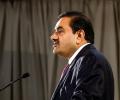
Gautam Adani, chairman of Adani group, emphasised that energy and intelligence are inseparable national priorities, asserting that India must build its own capabilities in these sectors rather than relying on external sources, especially in the context of global conflicts and shifting supply chains.

The $6.3 billion Binance heist has renewed concerns over nation-State cyberattacks and AI-driven vulnerabilities, putting the security preparedness of crypto exchanges under scrutiny.

Coursera found that nearly 94 per cent of employers of professionals who took micro-credential courses on the platform said these professionals could command higher salaries than their peers.

India is developing a 'Gross Domestic Knowledge Product' (GDKP) to identify and define its knowledge assets, a move aimed at safeguarding them amidst global efforts to monetise and 'weaponise' knowledge, according to NITI Aayog member R Balasubramaniam.

'The Indian market has struggled over the past two years.' 'It peaked in September 2024, and although it has moved up and down since then, investors have not really made money.'

Salesforce CEO Marc Benioff has identified a significant opportunity for India as the company transitions its enterprise systems to an AI-first model. He emphasised India's crucial role, leveraging its extensive pool of technology professionals and partners, in this global technological transformation, which he likened to a "Y2K moment" for engineering.
A foreign brokerage predicts that private investments in Indian AI startups are rapidly growing, with potential listings adding up to USD 100 billion to India's market capitalisation over the next two to five years. Goldman Sachs reported a tripling of PE investment in Indian AI startups in 2025 and highlighted India's rising global rank in AI funding and new AI companies.

Zoho co-founder Sridhar Vembu argues that predictions of AI's catastrophic outcomes are overstated and a global pause in AI development is improbable. He urges India to adopt an independent AI strategy, focusing on extensive foundational R&D across sectors, while remaining wary of market monopolisation attempts by major tech players. Vembu also highlights concerns about AI's impact on human judgment, skill development, and job markets, particularly for junior professionals.

Artificial intelligence major Anthropic has launched AI inference capabilities in India through Amazon Bedrock, allowing its Claude AI models to process data within the country's jurisdiction. This strategic move addresses the growing demand from Indian entities, particularly in regulated sectors, for compliance with local data processing norms as per the Digital Personal Data Protection Act. The initiative strengthens Anthropic's commitment to the Indian market, enabling secure and compliant AI deployment for sensitive workloads and fostering trust among major enterprises like Reliance, CRED, and NPCI.

'... but runs with the rigour and discipline of a large enterprise.'
IIIT Hyderabad and measurement technologies firm Hexagon R&D India have collaborated to establish the Hexagon Digital Twin Centre of Excellence (CoE) at the IIIT Hyderabad campus. This CoE will focus on applied research, education, and industry collaboration in computer vision, spatial computing, and AI-powered digital twins, providing access to advanced imaging technology.

Top Quad leaders announced new initiatives including a maritime surveillance system, military exercise, cable connectivity, and cybersecurity partnership to strengthen cooperation in the Indo-Pacific. They also opposed destabilising actions and economic coercion, reaffirming their commitment to a free and open region.
India is adopting a two-pronged strategy for artificial intelligence development, focusing on open-source models and indigenous innovation to counter global access restrictions on advanced AI technologies. The government aims to support local developers and ensure AI creates tangible economic impact across various sectors, rather than being solely driven by market speculation.
Vice President CP Radhakrishnan launched Gnani Artha, an end-to-end sovereign AI stack for Indian enterprises and public institutions. He emphasised that new technologies, including AI, will enhance ease of work and create more jobs, drawing parallels with the IT industry's growth. The initiative, backed by the India AI Mission, aims for self-reliance and includes the Gnani Evon v3.3 language model and Gnani Plexus AI platform, offering cost-effective Indic language capabilities.
Vice President CP Radhakrishnan launched Gnani Artha, an end-to-end sovereign AI stack for Indian enterprises and public institutions. He emphasised that new technologies, including AI, will enhance ease of work and create more jobs, drawing parallels with the IT industry's growth. The initiative, backed by the India AI Mission, aims for self-reliance and includes the Gnani Evon v3.3 language model and Gnani Plexus AI platform, offering cost-effective Indic language capabilities.

Wipro is betting on artificial intelligence (AI) and Cloud computing to earn more from its biggest contributor - the banking, financial services & insurance (BFSI) sector - which brought in 35 per cent of the revenue in FY23. The Bengaluru-headquartered firm also expects its consultancy arm Capco to aid in its vision. "Over the past few years, we have made significant investments in the BFSI sector and have improved our talent, capabilities, and processes in this space - both through organic investments and with the addition of Capco," Suzanne Dann, Wipro's chief executive officer for Americas 2 said.
